
 The idea that democratic forms of government require ‘checks and balances’ is long established. However, it can be interpreted in different ways. This blog looks at the concept from three different perspectives. From each viewpoint the concept has been eroded. The question is whether we should accept the erosion of checks and balances, or instead, look for new ways of introducing grit into the oyster of collusive forms of government.
0 Comments
 COVID 19 has introduced enormous uncertainty into peoples’ lives. Uncertainty about health, about jobs, about their established patterns of living. This blog looks at hypotheses about how such generalised uncertainty might translate into democratic politics.
 When governments reach international agreements, or sign international treaties, we usually applaud. We take it as a good sign that the different countries around the world can get together on rules of behaviour and cooperate in managing global problems. However, rather surprisingly perhaps, there is no generally accepted explanation of what gives such agreements their legitimacy. In one sense this does not matter. Theorists can disagree and the world rolls on regardless. Nevertheless, it would help underpin international rulemaking if there were to be a general understanding.
This post looks at the three main approaches, the first based on the role of states, the second on global values and the third on individual acceptance.  With globalisation in reverse, different countries and jurisdictions around the world are no longer converging on a common rulebook. Instead, the bigger players are trying to make their own rules apply to the wider world. The rules reflect different normative standards in areas such as the probity of financial markets, the integrity of information markets and the protection of the environment.
This desire to project their own standards into the wider world raises two basic questions. First, what governments can do to make their own rules affect the behaviour of those outside their own jurisdiction. Secondly, what, if anything, can be done to avoid conflict between different rules.  With public opinion polls suggesting that Biden will win the US Presidential race in November, there are concerns that President Trump may not accept the results and will try to hang on to office. Trump himself has fed these concerns by talking and tweeting about the potential for fraud with postal voting, by his accusations about cheating, and by his kite-flying for a delay in the vote. He has not denied that he could dispute the result if it goes against him (see also blog of 5/1/2019 where the 1863 model of persuasion of George Eliot predicts defeat).
A key underlying issue is about the importance for democracies of what is called ‘losers’ consent’. 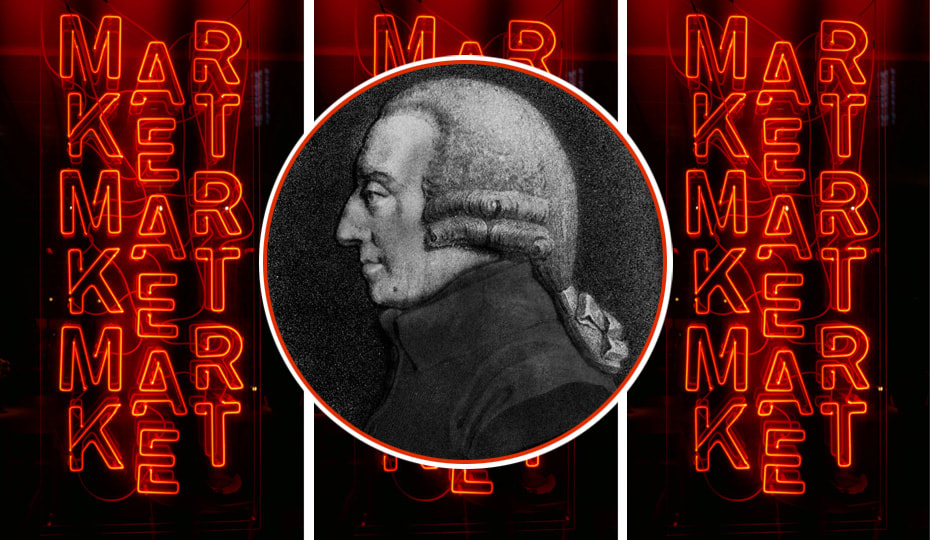 Before coronavirus made its appearance, the decline of liberalism from its highwater mark of the late 1980s was already the focus of attention (see blog of January 2019). The massive outlay of public finance and explosion in public debt associated with mitigating the economic effects of the coronavirus, together with social distancing measures to control the spread of the virus, and direct government interventions in the production and allocation of scarce items, means that the role of the state has now expanded dramatically. If liberalism was teetering before the coronavirus, it now seems on the floor. Some economists claim to have found a new 'paradigm' for market organisation in the post COVID 19 world.
Of course, liberalism does not deny the need for the state to try to provide reassurance and social protection in times of emergency. It represents an aspiration for a political system in more ‘normal’ times. The question remains about the validity of this long-term vision.  In a previous blog I referred to the importance of style in democratic politics - qualities such as civility and moderation. (sept.14, 2018 post). It is President Trump's total disregard for such qualities that makes him so toxic to democracy in America.
This blog looks at two different qualities: coherence and congruity and, in particular, to their relevance to problems of ‘illiberal democracy’.  The EU was originally scheduled to launch in May a three-year Conference on the Future of Europe. The start now looks likely to happen in the autumn instead. The EU faces challenges on many fronts. Divisions laid bare by the coronavirus pandemic have made the need to revitalise the Union even more urgent. The purpose of the Conference is to shape both a policy response and an institutional response to the challenges. This blog looks at the institutional strand.
For some, the Conference is an opportunity to define steps towards a fully federal future Popular opinion however could support moves in the other direction towards a more confederal future. This blog compares the two agendas.  It has been a constant refrain in recent years that, with globalisation, borders no longer matter. Supply chains are global. Capital is mobile across the world. Cashless payments systems cross borders. Pollution is no respecter of borders. Neither are infectious diseases. Data flows through the world wide web. Professionals connect through international networks.
One corollary is that small nations might as well pack up shop. Only the big brigades count (the US, China. India, Nigeria, Russia, the EU). Non-state actors are the future. Yet, despite these assertions, borders are making a comeback. .Trite thinking ascribes the comeback to 'economic nationalism'. This blog gives seven reasons why they still matter.  In the UK the surprise resignation of the Chancellor of the Exchequer in the middle of a cabinet reshuffle in February over his loss of control over the appointment of his special advisors has drawn attention to the role of the advisor. So too has the prominence of David Frost the Prime Minister's advisor and Brexit negotiator.
|
Archives
April 2024
|
 RSS Feed